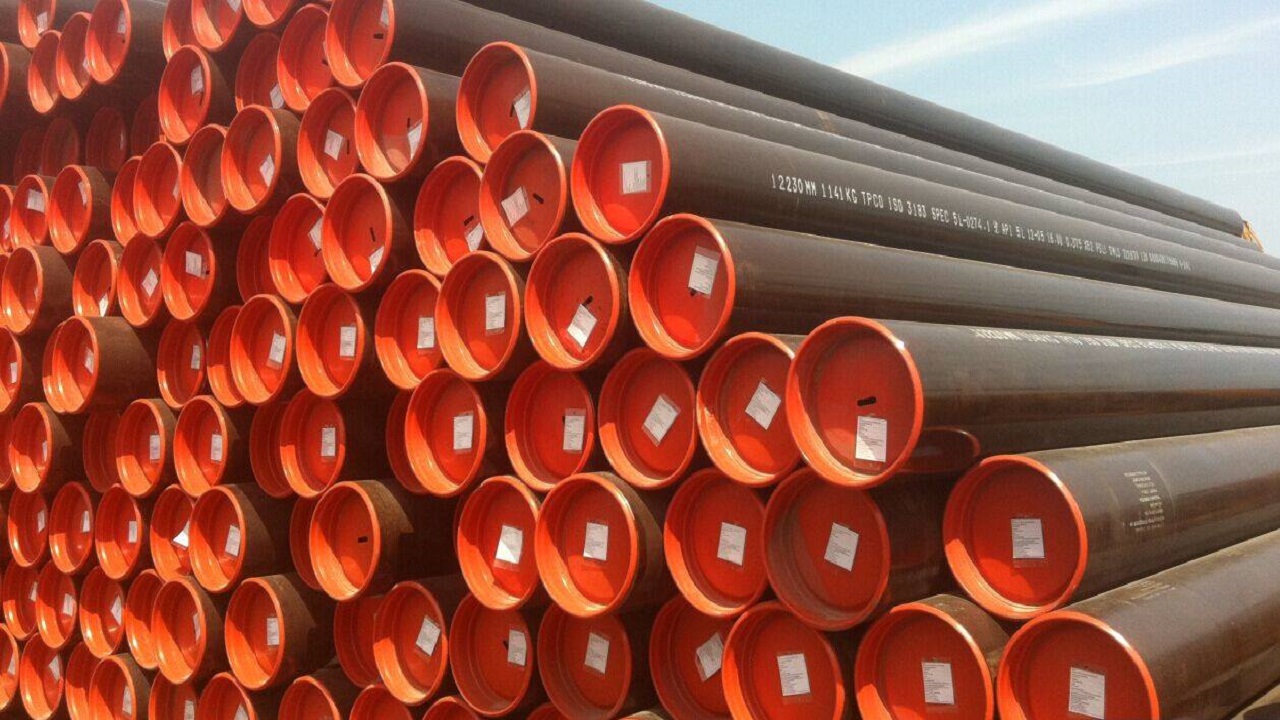
Pipelines are used for a variety of projects, ranging from transporting water to building structures. Pipe schedules are used by engineers and buyers to make suitable choices for the pipelines. A pipe schedule indicates the wall thickness of a pipe. There are two typical ones, which are SCH 40 and SCH 40S. They may sound nearly alike, but they are quite different. Tuspipe offers SCH 40 vs SCH 40S Pipe Differences for various requirements.
What Is SCH 40 Pipe
SCH 40 stands for Schedule 40. It is a type of pipe that is most prevalent. Generally, SCH 40 pipes are made of carbon steel, such as ASTM A53. The pipe's walls are thicker than a corresponding-sized SCH 40S pipe. Due to this fact, SCH 40 pipes are heavier and able to sustain more physical impact. SCH 40 pipes are usually used in the water supply system, low-pressure piping in factories, and building structures. Their strength owes to the thickness of the wall, meaning that they can be employed in a lot of everyday applications. For instance, the thickness of the wall of a 2-inch SCH 40 pipe is about 3.91 millimeters in comparison to SCH 40S.
What Is SCH 40S Pipe?
SCH 40S stands for Schedule 40S. The S normally indicates that the pipe is stainless steel. The most used SCH 40S pipes are constructed of stainless steel, like ASTM A312. These tubes are light since the walls are narrower compared to the SCH 40. For instance, the wall of a 2-inch VCU SCH 40 wall tube has a thickness of 2.77mm. It's thinner than SCH 40, but the stainless steel more often compensates for the lower wall thickness. Food processing plants, chemical plants, and certain coastal developments, which are also prone to corrosion due to salty water, benefit from using these SCH 40 pipes, which have to be maintained clean and are least prone to rust.
Significant Differences Between SCH 40 and SCH 40S
The first is wall thickness. SCH 40 pipes are thicker and heavier. SCH 40S pipes are lighter. SCH 40S can be around 30 percent lighter than SCH 40 for an equivalent outer diameter. The second distinction is material. SSCH 40 is carbon steel, and SCH 40S is stainless steel. SCH 40S has more chromium and nickel than regular SCH 40; thus, they are less prone to rusting. The third difference is pressure and temperature performance. SCH 40 pipes tend to be able to handle higher working pressure at room temperature due to their thicker walls. However, SCH 40S stainless steel pipes tend to perform better at higher temperatures, as stainless steel does not change its properties when heated. The fourth distinction is in usage. SCH 40 is typically used in buildings, water systems, and low-pressure piping. SCH 40S finds application in food factories, chemical transportation systems, and seawater projects.
Industry Examples
A steam transmission line in a refinery can be made of SCH 40 carbon steel. However, it can deform at high temperatures. It can be replaced with SCH 40S stainless steel pipe to enable the system to operate at a higher temperature without any issues. SCH 40S stainless steel pipes are used in a food factory due to their ability to withstand rust and their ability to meet hygiene requirements. On the other hand, SCH 40 pipes are more applicable in simple construction projects where rust resistance is not a significant concern. SCH 40S stainless steel pipes are much more durable in coastal plants where water and salt can rapidly corrode carbon steel.
Dimension and Weight
The SCH 40 pipe has a 6.02 mm layer thickness for the 4-inch pipe wall, and the SCH 40S pipe has a 2.77 mm layer thickness for the 4-inch pipe wall. This implies that SCH 40 pipes weigh more, thereby increasing the overall weight of a project. Compared to SCH 40S, it decreases the deadweight and reduces the support cost. Actually, SCH 40S pipes can save the total cost of the pipe support by approximately 18 percent in some sizes. This renders them handy to companies that want to save on structural supports.
Conclusion
SCH 40 and SCH 40S pipes are not identical, and there are distinct differences between them. SCH 40 pipes are heavier, thicker, and typically of carbon steel. They are helpful in general construction and for applications at lower temperatures. SCH 40S pipes are thinner, lighter, and are typically made of stainless steel. They are more resistant to rust and can withstand more heat in most instances. The two are relevant to various industries. With this knowledge of their chemical composition, wall thickness, and performance, engineers and purchasers can select the most suitable pipe for their application. Tuspipe offers SCH 40 and SCH 40S as a reasonable alternative to meet a wide range of needs.